Shopify and BigCommerce are the two leading hosted e-commerce platforms for growing and mid-market brands. Both are reliable, secure and capable of running stores with serious revenue. The right choice depends less on which platform is "better" and more on your catalog, your team and how you sell.
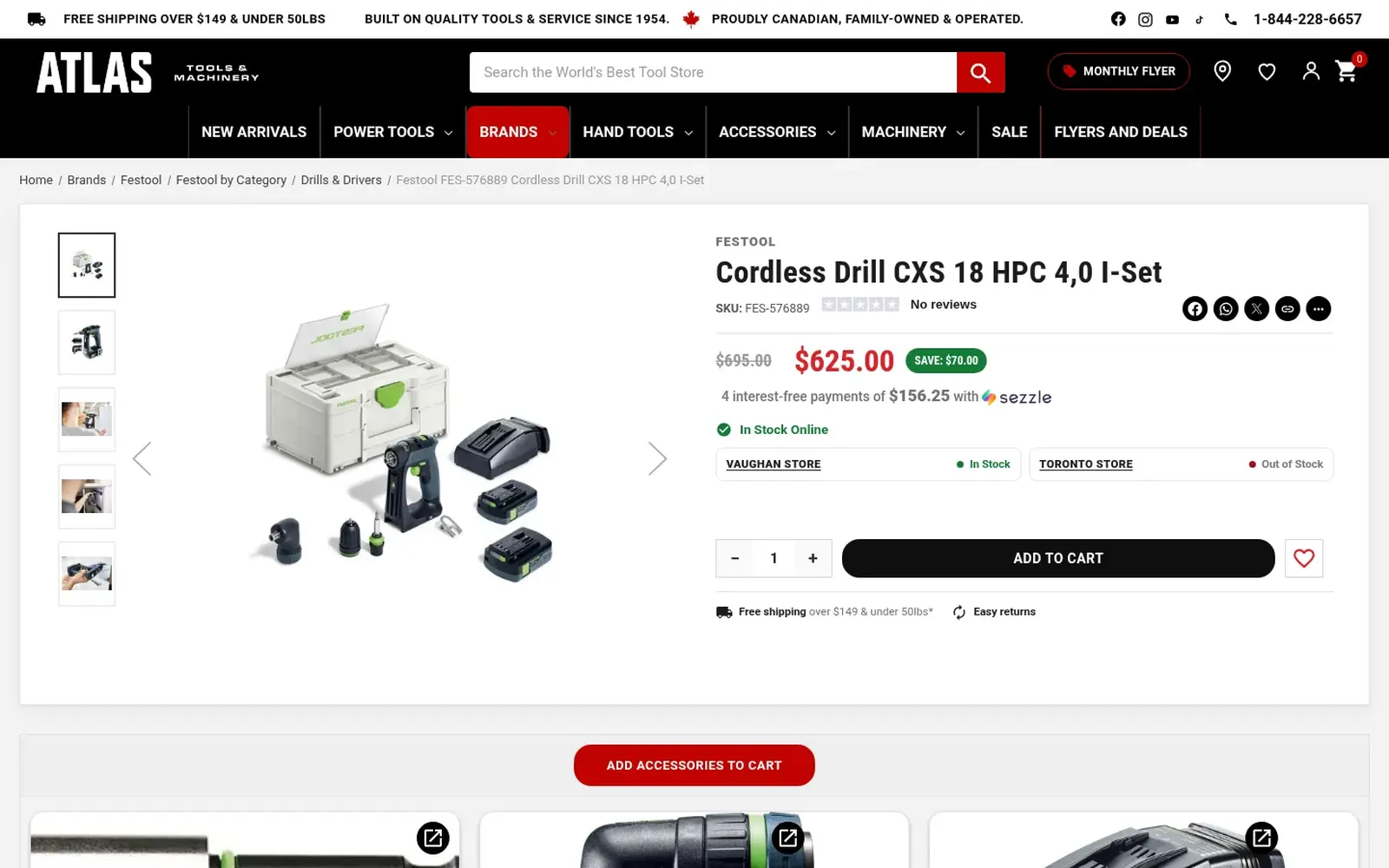
At Startup Slang we build on both. We built the Atlas Tools & Machinery store on BigCommerce, and Shopify stores for brands including Netflix's Letterkenny, Wellwise by Shoppers Drug Mart and SLK Home. Here is how we compare them.
The short answer
- Choose Shopify if you value a high-converting checkout, the largest app ecosystem, built-in marketing tools and a platform that day-to-day teams find easy to run.
- Choose BigCommerce if you have a very large or complex catalog, need extensive built-in B2B features, want flexibility in payment gateways, or plan a multi-storefront or headless setup with fewer apps.
Catalog and product data
BigCommerce has long been strong for large catalogs. Products support many options and modifiers, custom fields and detailed attributes out of the box, which suits technical retailers. For Atlas, whose customers shop by category, brand and deal across many brands, BigCommerce's catalog tools were a natural fit.
Shopify has caught up significantly. Metafields and metaobjects let you model rich product data, and recent increases to variant limits help stores with many options. For most fashion, beauty, home and lifestyle brands, Shopify's catalog is more than enough.
Checkout and conversion
Shopify's checkout is one of its biggest advantages. Shop Pay gives returning shoppers accelerated checkout across millions of stores, and Shopify continuously optimizes the checkout at massive scale. On Shopify Plus, checkout extensibility allows custom fields, upsells and branding without editing core code.
BigCommerce's checkout is customizable and supports many payment gateways, which can matter for merchants with specific processing needs. If checkout conversion is your top priority, Shopify has the edge; if payment flexibility is, BigCommerce does.
Apps and ecosystem
Shopify's app store is the largest in e-commerce, covering subscriptions, reviews, loyalty, bundles and almost anything else. That speeds up launches, but too many apps can slow a store and add monthly costs.
BigCommerce includes more features natively, so you may need fewer apps, and its ecosystem covers the essentials. For merchants who dislike app sprawl, that is a real benefit.
B2B and wholesale
BigCommerce's B2B Edition offers company accounts, quotes, price lists and purchase orders, and is popular with distributors and manufacturers. Shopify Plus now includes native B2B features such as company profiles, catalogs with custom pricing, payment terms and quantity rules. Both are viable; the decision usually comes down to your ERP, your quoting process and whether you also sell direct to consumers on the same store.
Headless and multi-storefront
Both platforms offer strong APIs for headless builds. Shopify has Hydrogen and Oxygen, a full first-party stack, which we cover in Shopify Plus vs. headless commerce and our headless Shopify page. BigCommerce supports multiple storefronts from one back end and works well with headless frameworks.
SEO
Both platforms can rank well. Shopify's fixed URL structure (/products/, /collections/) is sometimes criticized, but it rarely holds a well-optimized store back. BigCommerce allows more control over URL structure. In practice, content, site speed, internal linking and structured data matter far more than the platform.
Costs
Both platforms charge monthly subscriptions that rise with your plan; BigCommerce ties plan level partly to online sales volume, while Shopify Plus pricing is based on a fixed fee or a percentage of sales at higher volumes. Add apps, themes, development and payment processing. Always model total cost of ownership over three years, including the development work each platform requires for your specific needs, rather than comparing headline plan prices.
Ease of use for your team
Shopify's admin is widely considered the easiest to learn, and the talent pool of Shopify developers and marketers is very large. BigCommerce's admin is capable and logical, but more features can mean more to learn.
How to decide
Answer these questions with your team:
- How many products and variants do you have, and how complex are the attributes?
- Do you sell B2B, B2C or both, and how do you quote and invoice?
- Which ERP, POS and fulfilment systems must integrate?
- How important are payment gateway choices?
- Who will run the store day to day, and what are they comfortable with?
- Do you need a custom frontend now or in the next two years?
If the answers point to a move, our Shopify migration and BigCommerce agency pages explain how we approach each platform.
Frequently asked questions
Is Shopify or BigCommerce better for SEO?
Both can rank well. BigCommerce offers more URL control, while Shopify uses fixed URL patterns, but content quality, speed, internal links and structured data matter far more than the platform.
Is BigCommerce better for large catalogs?
BigCommerce has traditionally been strong for large, attribute-heavy catalogs, though Shopify's metafields, metaobjects and higher variant limits now cover most catalogs well.
Can I move from BigCommerce to Shopify?
Yes. Products, variants, customers and orders map well; the key is planning custom fields, options and 301 redirects so you keep your rankings.
Which platform has better B2B features?
BigCommerce B2B Edition is mature and popular with distributors. Shopify Plus now has native B2B features too. The best fit depends on your ERP and quoting process.